written by Maija Tuomola, Teacher, Lounais-Hämeen koulutuskuntayhtymä
Traditionally, gender equality is examined through rights, resources, or outcomes (e.g., pay gaps). From the perspective of an educational institution, it is important for us to look at equality through the lens of people’s real opportunities to act—that is, inclusion.
So what is this about?
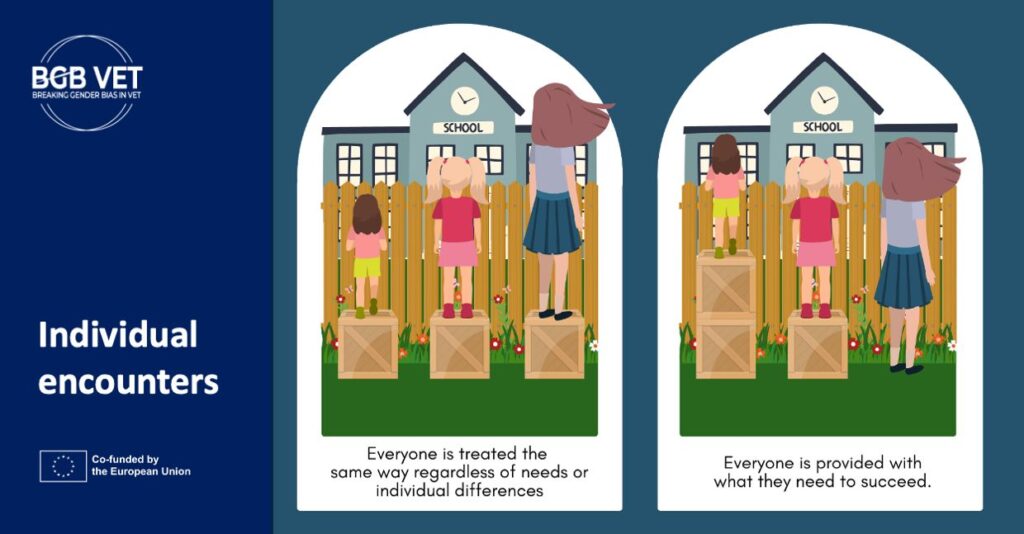
Equality does not mean only identical treatment or the same resources, but that everyone genuinely has the possibility to live the kind of life they want. In other words, it is an inclusive way of thinking in which these opportunities are supported individually.
An inclusive educational institution is a community where all students—regardless of learning difficulties, disability, language, culture, or other differences—can participate in the same teaching and community. The aim is not mere physical presence, but genuine participation, equality, and individually supported learning.
In such an institution, diversity is seen as a strength. Everyone has the right to belong to the community and to receive the support they need. At the same time, barriers to learning and participation are actively identified and removed.
The student’s experience and equal opportunity to participate are at the center.
From the perspective of gender equality, inclusion becomes real in an educational institution’s everyday life when we ask: can different genders truly benefit from education in the same way? For example, are internships available to everyone? Is teaching designed so that everyone can participate? Does everyone receive guidance, study support, and understanding when challenges arise? Is career guidance tailored to individuals?
If education is formally available to all, it can be easy to conclude that equality is achieved. But what if not everyone feels welcome? What if cultural expectations, role models, or fear of being an outsider limit choices, affect social participation, and influence learning? In these situations, as a community we must pay attention to interaction, practices, and strengthening a sense of belonging.
Inclusion is achieved when we genuinely want to influence everyday encounters and practices, listen to students’ voices, and enable the support needed for learning. Understanding the concept of inclusion helps us understand what equality and non-discrimination are about at their deepest level—above all, the realization of human rights.
AI’s summary gets to the heart of it:
Real equality is not about opening the same door for everyone—but about ensuring everyone has an equal chance to walk through it.
Have a wonderful spring!
Sources:
Ernesti. Vuorovaikutus, kohtaaminen ja osallisuus. Available at: https://www.jamk.fi/fi/projekti/ernesti-ammatillisen-koulutuksen-erityinen-tuki-ja-inklusiivisuus/toimintatapoja-ja-kaytanteita-oppimisen-tukemiseen
Opetushallitus (2026). Inkluusio on vahvasti läsnä suomalaisessa koulutusjärjestelmässä. Available at: https://www.oph.fi/fi/uutiset/2026/inkluusio-vahvasti-lasna-suomalaisessa-koulutusjarjestelmassa-julkaisimme
Ryymin, Essi & Ryökkönen, Sanna. 2024. Uutta ajattelua ammatillisen koulutuksen inkluusiosta kuvittelun ja tunnustuksen voimin. Available at: https://unlimited.hamk.fi/ammatillinen-osaaminen-ja-opetus/uutta-ajattelua-ammatillisen-koulutuksen-inkluusiosta-kuvittelun-ja-tunnustuksen-voimin/